Linux Generate Ssh Key For Different User
Posted By admin On 14.04.20Quick steps: Create and use an SSH public-private key pair for Linux VMs in Azure.; 4 minutes to read +4; In this article. With a secure shell (SSH) key pair, you can create virtual machines (VMs) in Azure that use SSH keys for authentication, eliminating the need for passwords to sign in. Anything.pub is the public key, which you could append to the user's /.ssh/authorizedkeys on any destination server. The other file, just called anything is the private key and therefore should be stored safely for the user. The default location would be username/.ssh/idrsa (here named idrsa, which is default for rsa keys).
Oct 20, 2014 How To Create SSH Keys. The first step to configure SSH key authentication to your server is to generate an SSH key pair on your local computer. To do this, we can use a special utility called ssh-keygen, which is included with the standard OpenSSH suite of tools. By default, this will create a 2048 bit RSA key pair, which is fine for most uses.
Hi everyone.
I have a my droplet with SSH key and it works properly. I created a new user in this droplet. I want to create a new SSH key for this new user. I will use this user for my php website. So, this new ssh key must be different from the root user key. How can I do that?
I’ve been doing a lot of research. But I could not find something that works.
You should be clear on the answers you provide. Because my english is not good. Thanks.
These answers are provided by our Community. If you find them useful, show some love by clicking the heart. If you run into issues leave a comment, or add your own answer to help others.
×SSH is a cryptographic network protocol which is used to securely connect to a host over an unsecured connection. By default, any Linux operating system supports SSH; hence using a third party client is unnecessary like in the Windows platform. SSH protocol requires a server which accepts SSH connections, and a client which sends the requests to connect to the host. The typical usage of SSH protocol is remote login, remote commanding, and file transfer. Nowadays many Linux based servers make use of SSH protocol to tighten its security. A notable part of the SSH protocol is its authentication key pair which is used to identify and authorize users. So, this article demonstrates what are they, how to generate them, and how to utilize them to protect the server, and other relevant information.How to Generate Keys and What Are They?
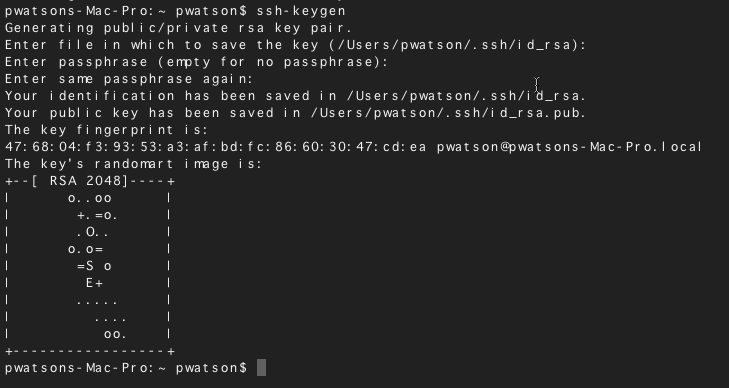
Generating SSH key pair consists of two basic phases. The first phase is generating the key pair on the local side, the second phase is copying it to the remote host, registering in the server and configuring the ssh daemon to make it useful. A key pair consists of two files, id_rsa and id_rsa.pub which are private and public keys respectively. The public key resides on the server side, whereas the private key is used when accessing it over SSH protocol.
In the following example ssh-keygen command is used to generate the key pair. When generating the key pair, the command prompt asks a name for a key, if it’s omitted the default name – id_rsa is used instead.
How to Use the Keys?
Once the key pair is generated on the local side through terminal window, the next step is to prepare them for employing for authentication purpose. The most convenient way to upload and register the public key in the server is using the ssh-copy-id command, what it does is copy the public key to the given user account located in the given host. As seen in the following example when the ssh-copy-id, username, the host name along with the password are all given the public key is copied and registered on the server side. If the username is root, the public key is uploaded to /root/.ssh/ on the server.
That being said, the server still isn’t protected with the SSH key pair as it’s not configured properly. Anyone can still access to the server if the password of the user account is known; hence the password has to be disabled while enabling the key pair verification. To disable the password authentication, edit /etc/ssh/sshd_config file where the settings for the SSH daemon are contained. In the file, the PasswordAuthentication has to be altered to NO, ChallengeResponseAuthentication should be altered to No as well. As the next step the sshd daemon has to be restarted for changes to take effect, which can be done with sudo systemctl reload sshd. Finally, the new key pair authentication method can be tested by giving ssh username@username in the terminal window.
Theory of The Keys and How They Work
The key pair is a part of the SSH standard which is used to connect to a remote host over an unsecured network. As stated earlier, the key pair consists of two keys – public and private keys which are uploaded to the server side and kept on the client side respectively. The public key is denoted by .pub extension, and the private key doesn’t have any extension.
Generate private key from crt openssl. When the user is accessing the server, the SSH daemon installed on the server side requests the user for the SSH private key, if it’s provided the private key is compared against the public key in the server. If the private key corresponds to the public key, authentication is successful, otherwise it rejects the login request. By default, the key pair uses RSA which is a cryptographic algorithm to generate the keys. But there are other popular algorithms as well, such as DSA and ECDSA.
ssh-keygen Command Line Options
ssh-keygen is used to generate keys and it provides a number of options to ease the key pair management, tighten the security and increase the flexibility. The following options are some of the prominent options which may come handy when managing a server.
Passphrase
The Passphrase option is used to provide a secondary protection when a key pair is used to authenticate the user. What it does is to secure the private key with a password and consequently the user is required to provide the passphrase when logging in to the remote host. It asks during the key pair creation.
Change the Bit Strength
Bit strength refers to the key pair’s key size which defines how strong the key pair is. Nowadays the standard size is 2048 bits, but it used to be 1024 bits and is no longer acceptable as it’s speculated that many powerful hardware are capable of cracking anything up to 1024 bits or even above given the right amount of time. Fortunately, ssh-keygen currently supports higher bit strength values such as 2048 and its next fashionable number 4096 which is recommended if it’s possible due to the large bit strength. The bit strength value can be adjusted with –b command, if it’s omitted the default value – 1024 or 2048 depending on the ssh-keygen is used.
Comment Public Key
Commenting is applicable to the public key, and is useful in organizing the keys if there are a large number of keys involved. The typical usage of commenting is when multiple admins use a server, but still want to distinguish one key from another. The following format is used to add a comment when generating a key pair.
Generate Ssh Key Github
Change Passphrase of a Private Key
Generate Ssh Public Key
Like adding a passphrase when generating a key pair, the existing passphrase can also be changed. Since the passphrase is applicable to the private key which resides on the client side, the command has to be executed on the client side along with the name of the private key. This option takes 3 parameters, old password, new password and the private key to apply the changes.
Change the Cryptographic Algorithm
How To Generate Ssh Keys
The Algorithm defines how the information in the key pair is encrypted in order to verify each other when the connection is being established. Ssh-keygen supports several popular algorithm types which are RSA, ECDSA, DSA, ED25519 and RSA1. Nowadays the popular algorithm among many servers is RSA due to its wide spread usage and relatively good security, however it’s currently being upgraded to the newer version ECDSA which is much lighter, and has a low bit value with a high security compared to RSA. ED25519 is the newest version among these, and therefore not many clients support it, but still server side implementation is possible at the moment. DSA is the oldest version among all these algorithms, and is no longer employed in most of the hosts as it’s not secure anymore. According to OpenSSH 7 standard the support for DSA will no longer be given. The format to use the algorithm is as following.